Over-door organizers for rentals: measure the door first
The short answer: measure door thickness and the hairline gap above the door first, then hang an over-the-door organizer only if the door still closes and clears the frame. It needs no screws in the wall and leaves with you when the lease ends.
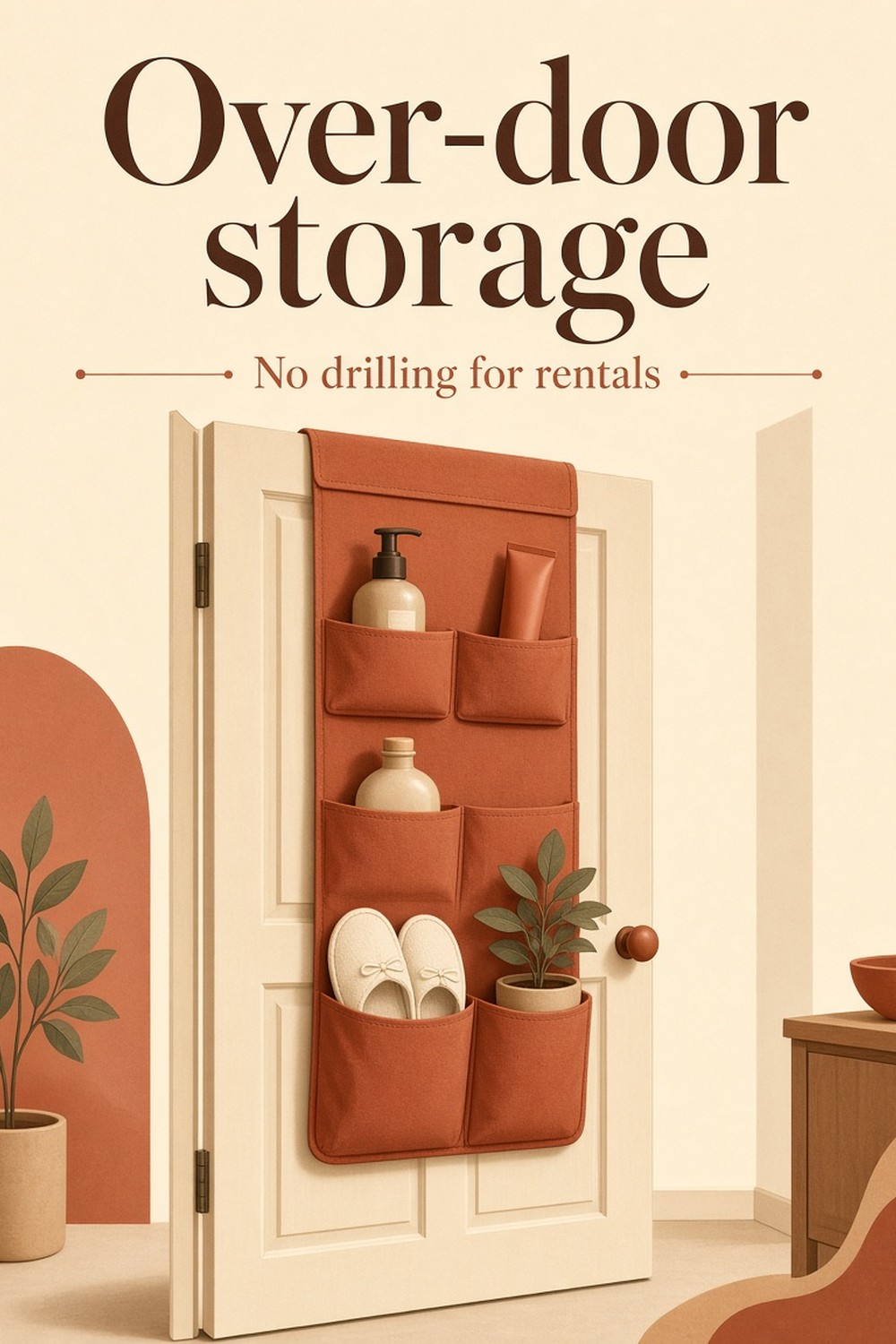
An over-the-door organizer turns the back of a bedroom, bathroom or cupboard door into vertical storage. It is one of the few rental upgrades that usually needs no landlord permission, because nothing is screwed into a wall. The failure mode is simple: the hooks are too thick for the door, or the pockets hit the frame so the door will not latch. Measure first.
Measure four things on the door
- Door thickness at the top edge (many hangers need under about 4.6 cm / 1.8 in — check the listing).
- Gap above the door inside the frame: there must be a hairline space for the metal hooks.
- Clear height from the top of the door down to the floor or any heater, so long shoe organizers do not drag.
- Swing clearance on the hinge side and the latch side: open and close the door with a cardboard mock-up of the pocket depth before you buy.
If the door rubs the frame today, fix that first; an organizer will make it worse.
What belongs on the door (and what does not)
Good fits:
- Shoes, scarves, cleaning cloths, toiletries in a bathroom cupboard door.
- Lightweight pantry packets on the inside of a kitchen cupboard door (heat and steam still apply — keep away from the oven).
Bad fits:
- Cast-iron pans, full paint cans, or anything over the weight rating printed on the packaging.
- Exterior front doors in buildings that ban hanging items in the corridor.
Adhesive hooks are a different tool: useful for keys and light bags on a wall, not a substitute for an over-door rack, and they fail in heat and steam. See hang kitchen utensils without drilling for the kitchen rule.
We may earn a commission if you buy through our links. As an Amazon Associate I earn from qualifying purchases.
Amazon Basics 24-pocket over-the-door organizer
Hangs over a standard door on hooks: shoes, cleaning supplies or small items off the floor.
Whitmor over-the-door shoe shelves
Hangs over a standard door on hooks: shoes, cleaning supplies or small items off the floor.
Pair it with entryway pieces that stay freestanding
If the door is your only entry storage, combine the organizer with a shallow freestanding shoe bench or cabinet so the walkway stays clear. Keep about 75–90 cm for the main path from the door into the room. Layout examples: shoe storage in a small entryway and small entryway storage.
Crosley Anderson entryway bench with shoe shelves
Low bench with open shoe shelves underneath: the 'low layer' of a slim storage wall. Freestanding, no drilling.
VASAGLE shoe bench with cushion, 6 compartments
Padded seat for putting shoes on, six cubbies below for shoes or small baskets. Freestanding.
Command Large Utility Hooks, 7 hooks
Adhesive hooks for keys, bags and light jackets with no holes in the wall. Rated for light loads only; check the pack's weight limit.
Before Black Friday
Write your door thickness and gap on a note now. Then watch Black Friday 2026 for small spaces and rentals — we list what to measure and the pieces we have already checked, and we only add a deal after verifying it on the retailer’s own page. No invented discounts on this site.
What this page does not claim
- No price or star-rating numbers (check Amazon for the live listing).
- No guarantee a hanger fits until your door thickness and gap match the product’s own limits.
- Hero art is an illustration of the idea, not a photograph of the retail SKU.
Questions
Will an over-the-door organizer fit my door?
Measure door thickness and the gap above the door first, then check that the door still closes with the pockets on. Many hangers need a door under about 4.6 cm (1.8 in) thick.
What can I hang on an over-door organizer?
Shoes, scarves, toiletries and light pantry packets within the weight rating on the packaging. Not cast-iron pans or other heavy items.
Do over-door organizers need landlord permission?
Usually not, because nothing is screwed into a wall. Still check corridor or front-door rules in your building.
Planning November purchases? See Black Friday 2026 for small spaces and rentals.